
Why Patients in Overland Park Need Bone Grafts
Bone grafting in Overland Park is not just about today’s dental procedure. Once jawbone is lost, it does not grow back on its own. Bone grafting helps protect the shape and strength of your jaw after tooth loss, infection, or advanced gum disease. In many cases, it keeps future treatment options open and helps prevent more damage in the area.
When a tooth is being removed, Dr. Mancin often recommends a bone graft to help preserve the site for the future.
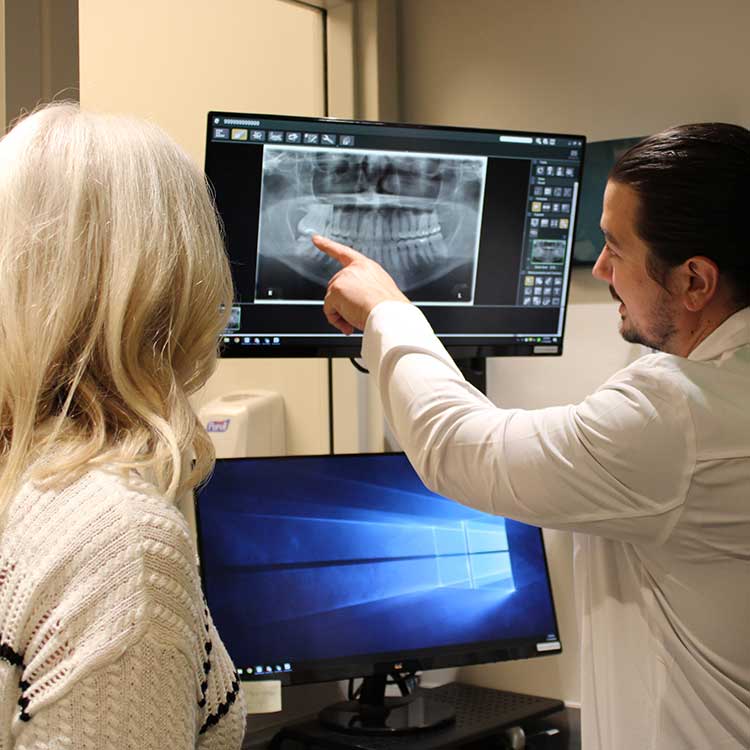
After Your Tooth Extraction
When a tooth is removed because of decay or infection, the surrounding bone can start to shrink quickly. A bone graft helps preserve that site for future treatment after tooth extraction.
Bone Loss From Gum Disease
Gum disease can slowly destroy the bone that supports your teeth. Bone grafting may help rebuild support in areas that have been damaged by periodontal disease and implants.
Preparing for Dental Implants
If there is not enough healthy bone to hold an implant securely, a bone graft may be needed first. This creates a stronger foundation for long-term stability before dental implants.
What Happens After a Tooth Is Removed Without a Bone Graft?
Most patients are never told what happens after a tooth is removed and the area is left alone. Once that tooth is gone, the jawbone in that spot starts to shrink. Instead of staying flat and strong, the ridge can collapse into a U-shape between the neighboring teeth.
That matters because the problem does not stay isolated to the missing tooth. As the ridge collapses, the bone supporting the neighboring teeth can begin to weaken on the side facing the gap.

A bone graft helps preserve the ridge after an extraction so the site holds its shape better while it heals. That can make it easier to place a future implant, support a bridge or partial, and protect the long-term stability of the teeth beside it as part of a broader full mouth restoration plan.
A tooth extraction by itself may cost less upfront, but when bone is lost, future treatment can become more complicated. In many cases, adding a bone graft at the time of extraction helps protect that site for what comes next.
What Type of Bone Graft Material Do We Use?
At OP Implant Dental, Dr. Mancin has always used synthetic bone graft material. He chose this approach because it offers a reliable option across a wider range of patients and helps preserve the site for future treatment.
Synthetic graft material is often a better fit across a wider range of cases. It can be more forgiving when a patient’s full health history is not completely known or disclosed, and it helps us take a more consistent approach to healing and site preservation.
The goal is simple: use the option that gives more patients the best chance of successful healing and keeps future treatment options open.
We have chosen the option that gives the broadest range of patients the best chance of success.
What Happens During a Bone Graft Appointment?
Bone grafting is usually done at the time of extraction or soon after the area is evaluated.
First, the tooth is removed and the site is thoroughly cleaned to make sure infection and damaged tissue are cleared out. Once the area is ready, the bone graft material is placed to help preserve the ridge and support healing.
After the procedure, Dr. Mancin typically prescribes a one-week round of antibiotics and brings the patient back for a post-op visit to make sure everything is healing the way it should.
From there, the graft usually needs about three months to integrate with the surrounding bone. Around the three-month mark, we take a 3D scan to evaluate the site. If the graft has healed well and the bone looks solid, the next step is usually implant placement shortly after that.
Our Timeline of Treatment:
1. On the Day of Procedure
The tooth is removed, the area is thoroughly cleaned, and the bone graft is often placed the same day. Cleaning the site matters because any leftover infection can affect healing.
2. Antibiotic Treatment
Dr. Mancin typically calls in a one-week round of antibiotics, even when the graft is placed the same day, to help protect the area during early healing.
3. One-Week Post-Op Visit
You come back in about a week so we can check the site, confirm healing is on track, and make sure there are no early problems.
4. Three Months of Integration
The graft needs time to integrate with your natural bone. In most cases, that healing period is about 90 days.
5. 3D Scan after Three Months
At around three months, we take a 3D scan to confirm the graft has taken and to see whether the site is ready for the next step.
6. Implant Placement Optional
If the graft looks solid on the scan, implant placement is usually scheduled about two weeks later if you like.
Bone Graft Recovery and Aftercare
The first week after a bone graft is the most important part of healing. Most patients can return to normal daily activity, but the area needs time and protection while the graft settles in.
For the first week, avoid lifting more than 20 pounds, bending over too much, or doing anything physically strenuous. You should also stay away from popcorn, potato chips, and very hot foods, since they can irritate the area or interfere with healing.
Normal eating is usually fine, but be gentle around the surgical site. If something feels off during healing, it is important to come back in so Dr. Mancin can evaluate the area, clean it if needed, and talk through the next step. Careful healing during the first week gives the graft the best chance to integrate properly.
Warning Signs to Call Us About
If something feels off during the first week, come back in so we can evaluate the area, clean the site if needed, and discuss the next step. Healing can be affected by several factors, including overall health history.
How Much Does Bone Grafting Cost?
Bone grafting usually costs between $2,100 and $2,500 in our area. This depends on the area of the mouth, the amount of grafting needed, and whether other treatment is being done at the same time. While that adds to the upfront cost, it can help preserve the bone and keep future treatment options open. You can also review our Dental Service Prices for a broader cost overview.
Insurance often does not cover bone grafting because it is usually treated as elective, even though protecting the site can make a big difference in what treatment is possible later. Protecting the bone early can be the more affordable long-term decision.
At OP Implant Dental, we work to bundle bone grafting into the larger treatment plan whenever possible so it stays more manageable for patients. We also offer financing options and walk patients through payment choices before they decide, with guidance on how to pay for dental implants. The goal is to help patients protect the site without getting priced out of treatment.
A Bone Grafting Case From Blue Springs, Missouri
One recent patient came to OP Implant Dental from Blue Springs, Missouri with a large bridge that extended from tooth #11 to tooth #15. Decay had developed under the bridge at tooth #15 and had already reached the nerve, which meant a root canal was no longer a predictable option.
Dr. Mancin removed tooth #15, placed a bone graft to preserve the site, and built the treatment plan around long-term stability. Instead of redoing everything from scratch, he preserved the original crown at tooth #11 and cut the bridge in half. Two implants were then placed to support a new bridge while keeping as much of the existing work as possible.
During healing, the patient wore an upper partial while the implants integrated. The graft and implants healed successfully, and the case is now being restored.
What makes this story worth sharing is not just the treatment. The patient found OP Implant Dental through her husband, who was already a patient. It is a good example of the kind of referral trust OP Implant Dental and Dr. Mancin have built, and of the complex cases patients are willing to travel for from Blue Springs and surrounding communities.
Schedule a Bone Graft Consultation in Overland Park
If you have been told you need a tooth removed, or you are already dealing with bone loss, this is the time to ask whether a bone graft could help protect the area before more support is lost. In many cases, acting early keeps more treatment options open later.
OP Implant Dental helps patients from Overland Park, Olathe, Lenexa, Leawood, Shawnee, Blue Springs, and surrounding communities understand what is happening at the site, what can still be preserved, and what the next step should be.
Call OP Implant Dental at 913-346-3600 to schedule your consultation. We can also walk you through financing and payment options before you decide.
Bone Grafting FAQ
We provide free consultations or second opinions. Call today to get started!
In most cases, a bone graft needs about three months to fully integrate. Around the three-month mark, OP Implant Dental takes a 3D scan to confirm the graft has taken and to see whether the site is ready for the next step.
Most patients tolerate bone grafting well, especially when it is done at the time of extraction. The first week is the most important part of healing, so it is important to protect the site and follow post-op instructions carefully.
Bone grafting usually costs between $2,100 and $2,500 in our area. Insurance often does not cover it because it is commonly treated as elective, even though it can play an important role in protecting the site after an extraction. OP Implant Dental also offers financing and works to bundle treatment whenever possible.
You can usually eat normally with some caution, but you should be gentle around the area while it heals. During the first week, avoid popcorn, potato chips, and very hot foods that can irritate the site.
In many cases, yes. Bone grafting is not only about implants. It can also help preserve the ridge and support the shape and stability needed for a bridge, partial, or other future restoration