
Looking for Dentures That Stay Put?
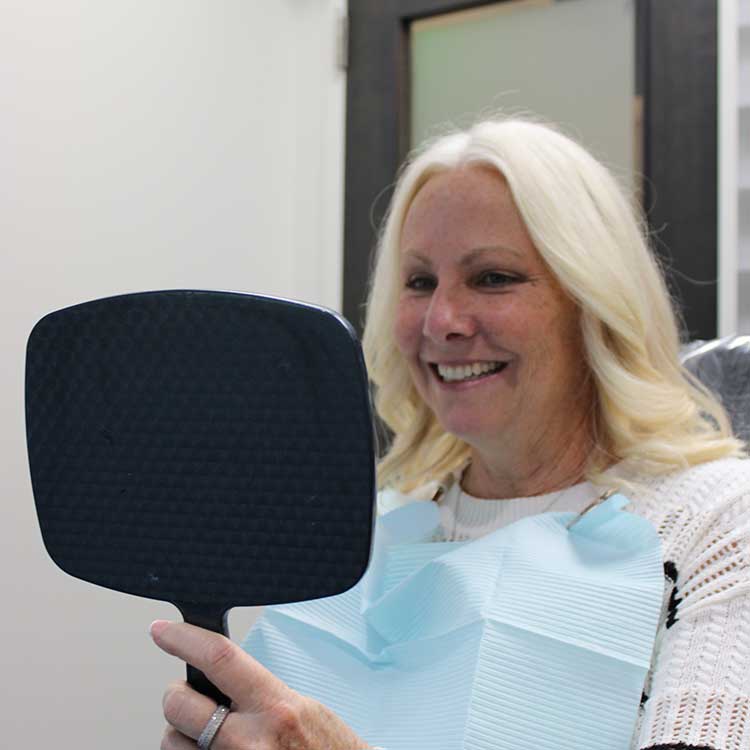
Implant overdentures can help if your dentures slip or need adhesive like traditional dentures. Shifting teeth makes daily life harder than it should be. Implant overdentures give those dentures a steadier base, so they feel more secure without becoming fixed full arch teeth. You still remove them for cleaning, but they are easier to live with day to day.
What Are Overdentures?
Overdentures are removable dentures that rest on natural teeth, dental implants, or prepared tooth roots. They are made for people who want a better hold than traditional dentures, but do not want fixed teeth. OP Implant Dental offers all three options.
Natural Teeth
When some healthy teeth are still present, they can help support the denture and improve fit. That can make the denture feel steadier and easier to wear.
Implant Support
Some overdentures use a few dental implants (2-4) as anchors. The denture attaches to those supports, which helps it stay in place while still letting you remove it for cleaning.
Prepared Roots
In some cases, remaining tooth roots can be prepared to help support an overdenture. This can be a useful option when trying to keep as much of the existing structure as possible.
Overdentures vs Traditional Dentures
If your current dentures slip, need adhesive, or make eating feel uncertain, overdentures are a stronger option. They still come out for cleaning, but they stay in place much better than traditional dentures during daily use.
Traditional dentures rest on the gums and often depend on suction or adhesive.
Overdentures add support from natural teeth, tooth roots, or implants, which helps improve fit, chewing comfort, and confidence.
In short, traditional dentures replace missing teeth. Overdentures keep that removable design, but improve the way the denture fits and functions. If you want to compare another removable implant option, see Snap-On Dental Implants.
How Overdentures Attach
Overdentures stay in place by connecting to support points built into your mouth, usually natural teeth, prepared roots, or implants.
The denture has matching attachments that let it snap into position and stay steady during the day. Some use ball attachments, some use bar attachments.
Either way, the goal is the same: a removable denture that feels much more secure than a traditional one. You can still take it out for cleaning, but it should feel stable when you eat, talk, and smile.
Living With Overdentures
With overdentures, you should be able to eat, speak, and smile with more confidence than with loose dentures. They are still removable, so you can take them out for cleaning, but they should feel steadier during the day.
Biting into foods like apples or eating ribs can feel much easier. Patients may also notice improved speech because the denture stays more secure. Our patients report improved confidence because of these to benefits.
Care and Maintenance
Overdentures are easier to clean because you can remove them for brushing and soaking. That makes it simpler to clean the denture itself and the parts that support it.
Remove the overdenture daily and brush it gently with a soft brush. Rinse it after meals, soak it overnight if recommended, and clean around the attachments carefully. Avoid hot water and harsh cleaners. Regular Preventative Dentistry visits also help keep the supporting tissues and attachments in good shape.
Who Is a Good Candidate?
Overdentures can be a good option if you wear traditional dentures, want a more secure fit, or still have some natural teeth or roots that can help support the denture. They can also be helpful for patients with bone loss who are looking for a removable upgrade instead of fixed teeth. Patients dealing with gum issues or bone loss may also want to learn more about periodontal disease and implants.
Occasionally a patient current traditional denture an be used. Dr. Mancin will need to evaluate your current denture in-person, along with taking some x-rays and scans to find out if you are eligible to secure your current denture using your remaining natural teeth, prepared roots, or implants. In some cases, tooth extraction may be needed before treatment.
A Closer Look at Overdenture Types
Below is a more in-depth look, with visuals to help patients understand how overdentures are supported and secured.
Healthy Tooth Options
Sometimes Dr. Mancin can use your healthy natural teeth to support an overdenture. The teeth are reshaped and capped with metal or resin coverings to create a stable base. These modified teeth, called abutments, help the denture fit securely and comfortably. This approach helps protect the remaining teeth and roots, supports jawbone health, and often feels more natural than conventional dentures.
Dental Implant Option
Utilizing our special implant attachment system your denture is secured in place. Small titanium dental implants are surgically placed into the jawbone, where they act as our stable anchors. These implants are topped with either ball-shaped attachments or a bar, which correspond to matching connectors embedded in the overdenture. When the overdenture is positioned, it “snaps” securely onto the implants, providing a snug, stable fit. This connection ensures the denture remains firmly in place during daily activities, offering comfort, functionality, and confidence.
Prepared Root Option
Root repair treatment allows us to use the remaining root as a stable support structure. The tooth roots are preserved and treated, often with endodontic therapy (root canal), to ensure they are healthy and free of infection. The tops of the roots may be reshaped or capped with metal or resin attachments that serve as anchoring points. Unlike implants, you will keep your natural tooth root. This approach provides better stability and reduces bone loss compared to suck-down dentures. They also improve the fit and comfort of the denture while preserving natural oral anatomy.
What Overdentures Can Change
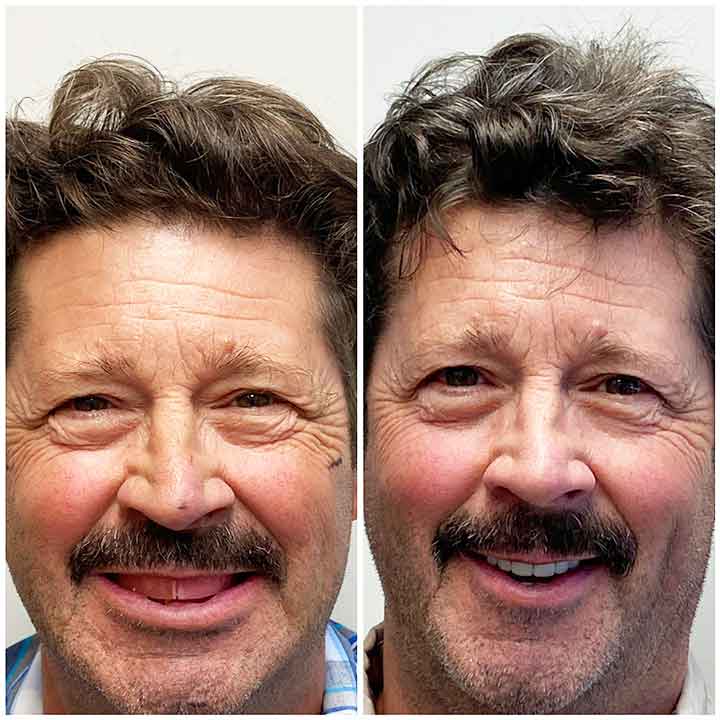
This patient wore loose dentures for years and wanted a more secure removable option. After treatment, the overdenture felt steadier and was easier to clean.
How Much Do Overdentures Cost?
Overdentures usually cost more than traditional dentures, but less than fixed full arch teeth. The final price depends on the support type, how many teeth or implants are involved, and whether any prep work is needed first. You can review our Dental Service Prices for a broader cost overview. OP Implant Dental offers financing options through Cherry, CareCredit, and Proceed, and you can also explore ways to finance dental implants. We also help you maximize your insurance benefits and review payment options that fit your needs.
Meet Dr. Andrew Mancin
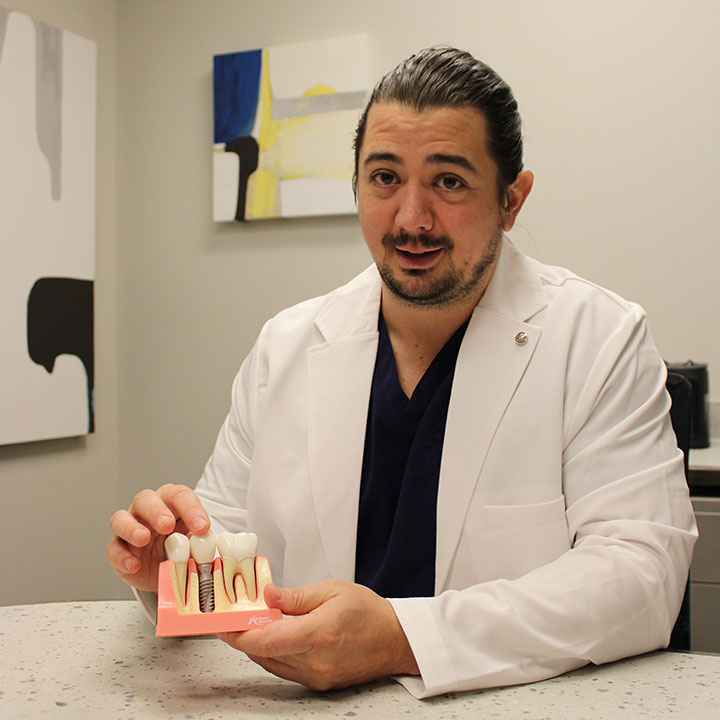
Dr. Andrew Mancin graduated from the University of Missouri-Kansas City School of Dentistry in 2014 and has placed more than 5,000 implants. He combines advanced implant training with transparent treatment planning and patient-focused care.
OPID Patient Reviews
We are proud to share positive stories from our patients.

I would definitely recommend if you're looking to get any dental work done.
His staff is professional and very knowledgeable, you can tell that they care about the patient and making sure to address any concern or questions you may have before or after your procedure. It is always a relief that after you have something done like this that you made the right decision to go with this office. I research Dr’s before I'm to have any type of surgery to make sure for the best outcome when you hear of people who have had not a good outcome.
One last comment about his reviews from other people, you can not give a office a negative or poor review because you couldn’t get financed, that’s not their responsibility, and doesn’t reflect on their ability to preform the dental work.
The rooms are all nice and clean, I highly recommend OC Implant Dental, it is all around the best dental office I have been to!
Paul P.
reconstruction with Dr Mancin.
I waited to review until I was finished
so I could give my honest opinion.
From the moment I walked through
the doors I was meant with warmth
and understanding.
I couldn't think more highly of Dr
Mancin. His attention to detail & the
pride he takes in his work is
exceptional. He's a perfectionist
about his work and was very caring
towards me. His skills as a surgeon
are unmatchable. I never had one
problem with my implants or bone
grafts.
His staff are exceptional as well. They
are very prideful, passionate and
caring.
The entire office is like a well oiled
machine!
I am so thankful Dr Mancin is who I
ended up choosing and I highly
recommend him and staff to anyone
looking for any dental need.
FAQ
We provide free consultations or second opinions. Call today to get started!
Overdentures are special dentures that fit over your teeth, implants, or roots to stay in place better. They help you chew, look great, and feel comfortable. Overdentures are strong, easy to use, and keep your mouth healthy, making them a great choice for replacing missing teeth
The best way to learn about the cost of our affordable overdentures is to schedule a free consultation. We’ll review all your options and create a payment plan that fits your budget!
Yes! We financing less-than-perfect credit too! Schedule a free consultation with Dr. Mancin to learn about the cost of our affordable overdentures financial specials. We’ll review your options and offer flexible payment plans tailored to your needs!
The time it takes to get overdentures varies depending on your treatment plan. If dental implants are involved, the process can take several months to allow for healing and implant integration. For overdentures that fit over existing teeth or prepared roots, the timeline may be shorter. During your consultation, Dr. Mancin will outline the steps and provide a personalized timeline based on your specific needs.
Insurance can often help cover some of the costs for overdenture treatments, depending on your plan and the specific procedures involved. At OP Implant Dental, our team is dedicated to helping you maximize your benefits. We’ll work closely with your insurance provider to ensure you get the most coverage possible and explain any out-of-pocket costs clearly. Schedule a consultation to learn more about how your insurance can support your treatment plan!